NexusLabs has successfully deployed a new low-cost integrated soil monitoring system in its Morocco pilot site in the Tensift River Basin — an important step towards smarter, more efficient irrigation in Mediterranean agriculture.

The system was designed and assembled by the Cadi Ayyad University team, combining reliability, accuracy and affordability so that it can be used not only by researchers, but also by farmers in real conditions.
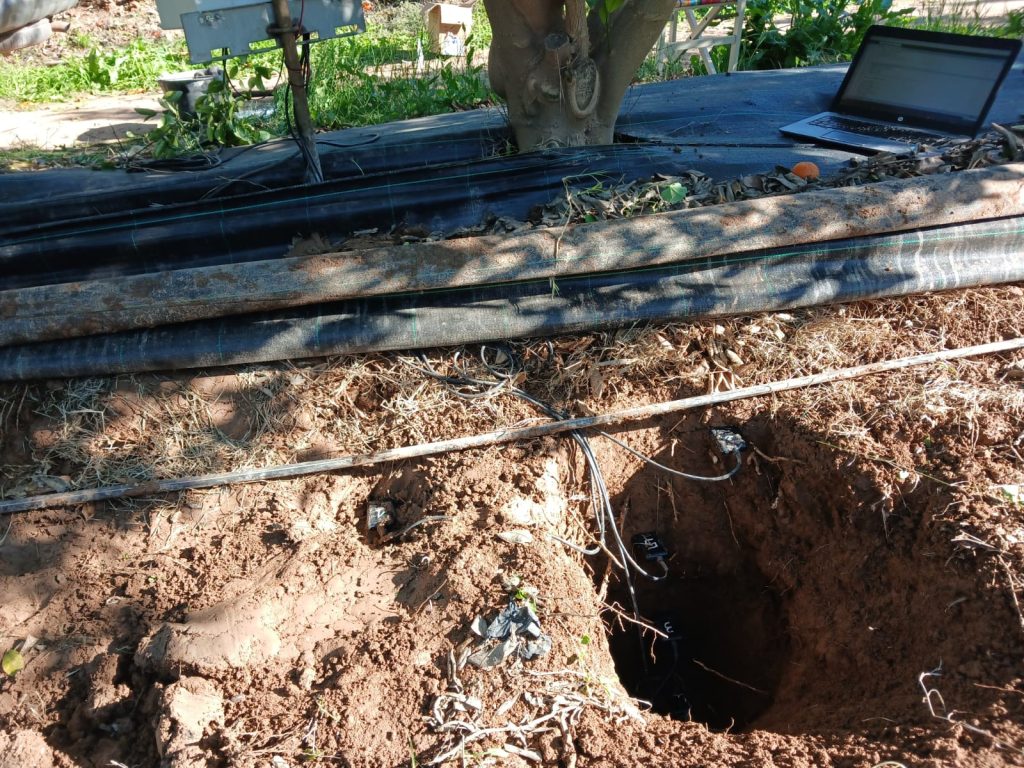
At its core, the system uses a set of sensors placed directly in the soil to continuously measure what is happening underground, including:
- Soil moisture
- Soil temperature
- Soil salinity and nutrients (electrical conductivity – EC)
The sensors are installed at multiple depths, from very shallow layers to deeper soil levels. This makes it possible to clearly understand:
➡️ how water moves through the soil after irrigation.
➡️ how much water actually reaches the plant root zone.
➡️ whether water is being lost beyond where crops can use it.

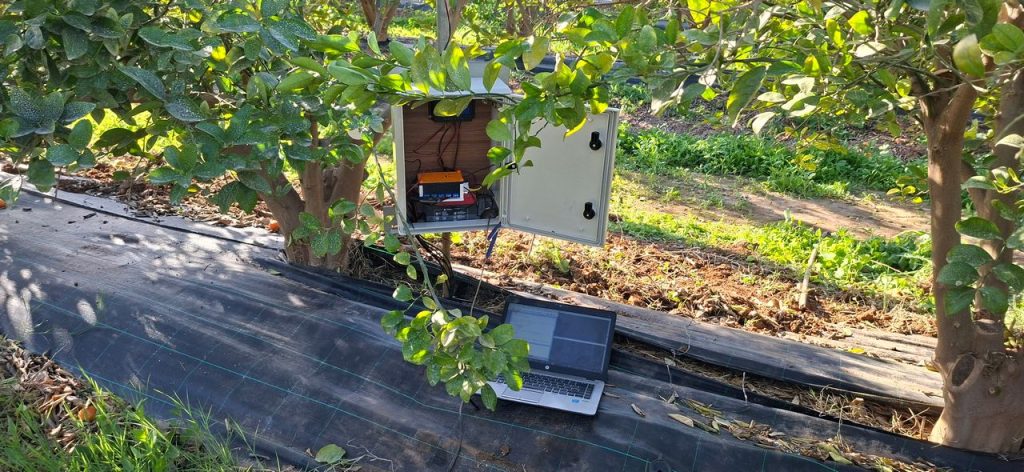
All measurements are recorded automatically by an embedded data logger and transmitted remotely, creating a smart, real-time monitoring system for soil conditions.
Why “low-cost in-situ validation” matters
This system plays a crucial role as a ground-truth reference for NexusLabs smart irrigation tools:
- Low-cost → built with affordable components that can be widely used in practice
- In-situ → installed directly in real farming conditions
- Validation → used to verify and improve satellite-based tools, models and digital irrigation platforms
👉 In simple terms, it helps ensure that digital solutions match reality in the field.
From data to practical decisions
This system supports farmers and water managers in answering very practical questions:
- Are crops receiving the right amount of water?
- Is irrigation water being lost below the root zone?
- Are salts or fertilisers accumulating in the soil over time?
- Can we trust digital irrigation tools for daily decisions?
By providing continuous and reliable data, the system helps optimise irrigation, reduce water and energy use, protect soil quality, and support more resilient and productive farming systems.
How the system works in practice
The monitoring system is designed to be both robust and reliable in real-world conditions:
- Measurements collected every 30 seconds
- Data aggregated every 30 minutes for stability
- Automatic remote transmission of data
- Local storage and recovery system to avoid data loss if connectivity is interrupted
This ensures a continuous and dependable picture of soil conditions, even in remote areas.
This deployment is a key milestone for NexusLabs, showing how simple, affordable technologies can support smarter water use and sustainable agriculture across the Mediterranean. By linking field measurements with digital tools and decision-making systems, the project is helping to bridge the gap between data and real-world action.