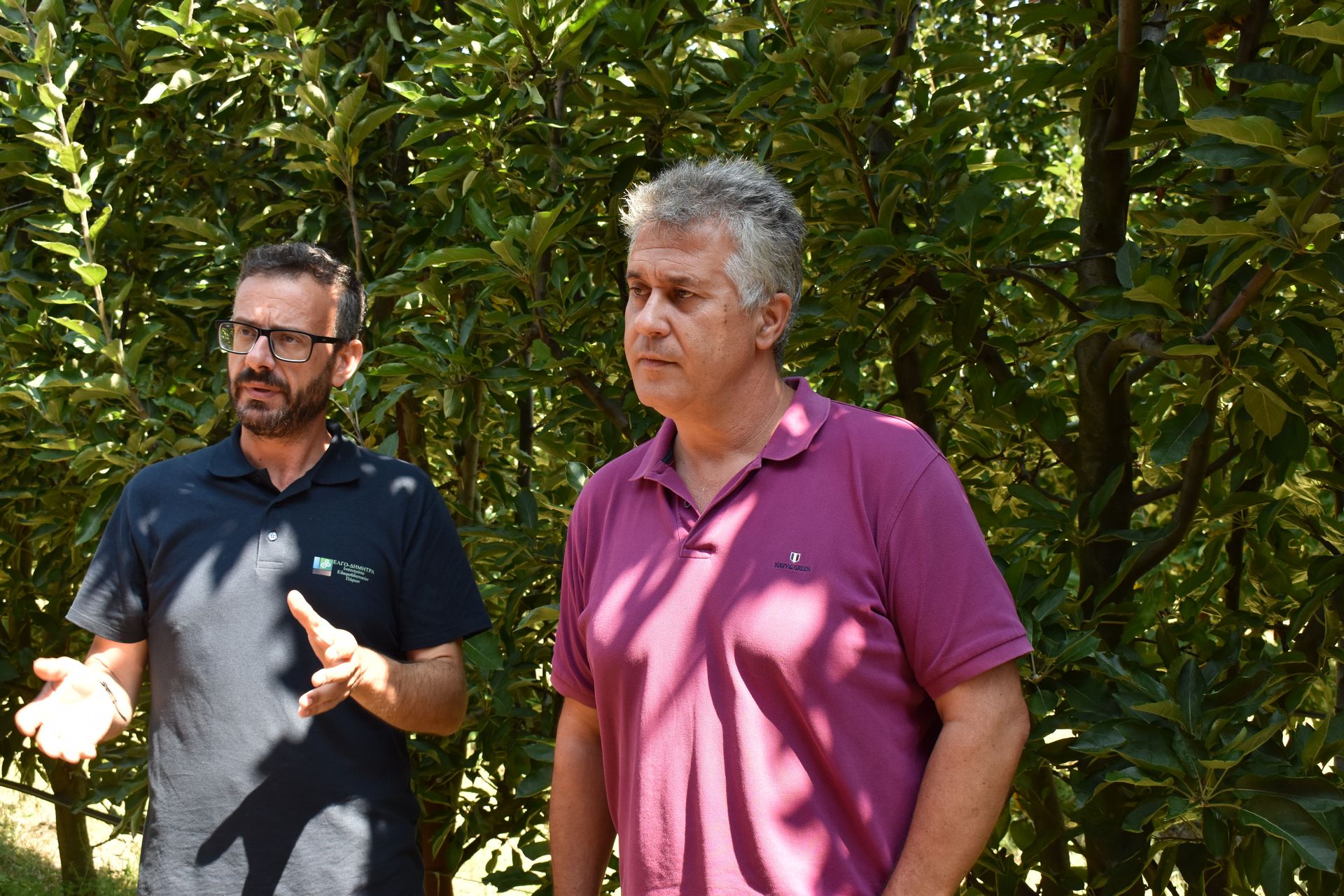
The Pinios Living Lab focuses on helping farmers use water more efficiently through smart irrigation, agroecological practices and data-driven decision support systems adapted to real farming conditions.
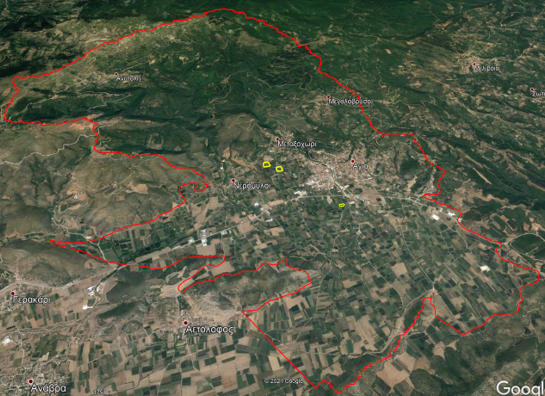
Led by Soil and Water Resources Institute together with the Technical University of Crete, the Living Lab operates in the Agia region of Central Greece within the Pinios Hydrologic Observatory, part of the Long-Term Ecosystem Research (LTER) network.
The area is characterised by intensive orchard cultivation, increasing climatic variability and growing pressure on water resources and energy costs. Farmers increasingly face fluctuating rainfall and groundwater recharge, more severe droughts, rising irrigation costs and declining soil quality, while production costs linked to plant protection and agricultural inputs continue to increase.
The core innovation of the Living Lab is the development of the Irrigation Connectivity Hub — a farmer-oriented digital platform combining soil moisture sensors, water meters, meteorological stations, weather forecasting and real-time irrigation monitoring tools.
The objective is not simply technological innovation, but practical usability: helping farmers make better irrigation decisions using reliable field-level data while reducing water consumption, energy use and production costs.
The Living Lab aims to:
Field monitoring and analysis have already generated important insights into irrigation behaviour and soil health. Long-term observations from pilot orchards show that irrigation practices frequently involve both over- and under-irrigation, while soil monitoring demonstrates how agroecological practices can improve soil structure and resilience over time.
A major focus of the Pinios Living Lab is helping farmers feel confident using digital tools and sensor-based irrigation systems. The project builds on long-standing relationships developed through previous initiatives in the region, including the Pinios Hydrologic Observatory and earlier European projects. This continuity has helped establish trust with farmers and local stakeholders while allowing NexusLabs to move beyond pilot experimentation toward practical implementation.
Stakeholder engagement includes farmers and cooperatives, local authorities, researchers, advisory services and pre-beta farmers testing the system before wider rollout. The Living Lab combines field demonstrations, farmer training, participatory engagement and continuous technical support, aiming to ensure that smart irrigation tools remain affordable, understandable and useful under everyday farming conditions.
From local experimentation to regional scaling
The Pinios Living Lab is designed not only as a research site, but as a scalable regional model for sustainable irrigation management.
Current activities include:
As one of the NexusLabs Mediterranean Living Labs, Pinios contributes practical experience on how data-driven irrigation management and agroecological practices can help Mediterranean farming systems adapt to increasing climate pressures while supporting both groundwater sustainability and farm viability.