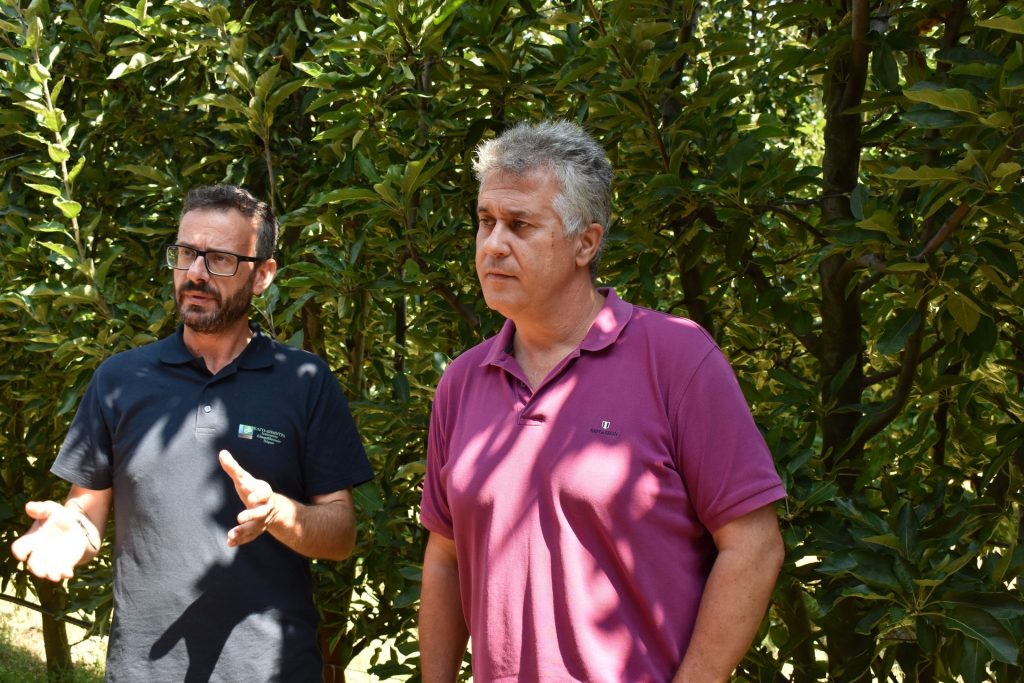
The Soil and Water Resources Institute team has been working closely with farmers to co-develop smarter, more sustainable irrigation solutions. We spoke with Andreas Panagopoulos, Research Director and Vassilis Pisinaras, Senior Researcher in order to grasp what they are hearing on the ground, the challenges ahead, and what gives them hope. While Andreas reflects on the bigger picture, the broader challenges, opportunities and stakeholder dynamics around smart irrigation, Vassili brings the project closer to the field, sharing practical insights from years of collaboration with farmers in the Pinios basin. Together, their answers highlight a common message: sustainable innovation only works when technology, local knowledge and trust go hand in hand.
Q: What are you hearing from farmers, managers and other local stakeholders?
Andreas: Smart irrigation amongst our champions is a technological approach they do have an opinion on and they do know its virtues. The methodological approach adopted in NexusLabs is quite welcomed by them as they feel that integrating their expertise in farming with high frequency technology allows them to have an in-depth insight of the conditions in their field, thus being able to make the final decision on how to proceed on their own. They do look forward to self-assessing their performance through the developed system and even more so they look forward to test and assess the system’s efficiency!
Water scarcity and energy costs are very important for them and they start realizing the challenge of not only cutting down on energy bills but also of cutting down on fertilization and agrochemicals’ treatment for plant protection against diseases (especially humidity related ones). Through this system they start understanding the potential for reducing production costs, thus indirectly increasing net income.
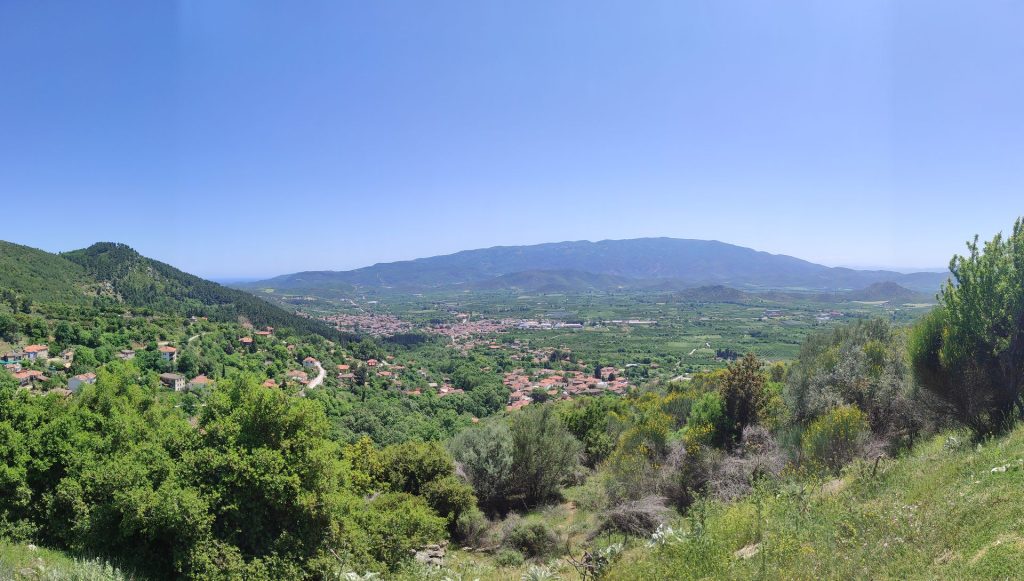
Vassilis: We have been active in the area since 2015, when we began developing the Pinios Hydrologic Observatory. Since then, through the various projects we have run in the region, farmers have become familiar not only with our solutions but with agricultural innovation in general. Equally important is the fact that we have built relationships of trust with them by supporting them through various problems they face.
Τhe Agia area does not face water scarcity with the same intensity as other parts of Thessaly. In Agia, water scarcity exists but is localized to specific areas and it appears towards the end of the irrigation season. However, farmers observe the intense fluctuations in rainfall—and consequently in groundwater recharge from year to year—as well as the increasing severity of droughts, so they are looking for solutions to ensure their farming remains sustainable.
Rational irrigation management, however, does not only help combat water scarcity. It also contributes to reducing energy costs, since irrigation in the Agia area relies almost entirely on electric pumps drawing from local boreholes. Furthermore, rational irrigation management improves plant protection. Plant protection is a critical factor in their agricultural activity due to the nature of the crops (orchards), which requires the extensive use of plant protection products.
The low concentrations of organic matter in the region’s soils is an issue we have highlighted—and continue to highlight at every opportunity—based on extensive soil analyses we conduct in the area. Farmers show that they understand this problem, and as a result, we are seeing them become increasingly open to agroecological practices.
The greatest challenge for the farmers in this region is improving plant protection. This makes sense because it represents the highest cost in their farming operations, according to recent data we collected analyzing all agricultural input costs. We must not forget that the farmers here are almost exclusively professionals; this is their primary occupation and their livelihood. Therefore, reducing production costs is critical for them, especially since the selling prices of their products are often disproportionately low.
Q: Mention one challenge you are facing on the ground, or “bet” that needs to be won?
Andreas: Acceptability and adoption by a wider group of stakeholders (i.e. recruiting followers) that are ready to commit on investing to smart irrigation coupled with agroecological practices. This goes through the process of developing facts data to convince them gradually, in time. We do believe that in terms of technology this will be a systems that will be straight forward to operate and maintain and do look forward to initiating the test phase in the coming weeks that will get us through the stress test for the system’s operationalization. The assessment of instrumentation against purchase costs is amongst the questions that we eagerly await to answer through the comparative tests to be carried out in the coming years. Socially, obviously, the development of a user friendly interface and trouble-free operation of the on-line platform for information provision on field related data is a bet to be won towards increasing the potential users.
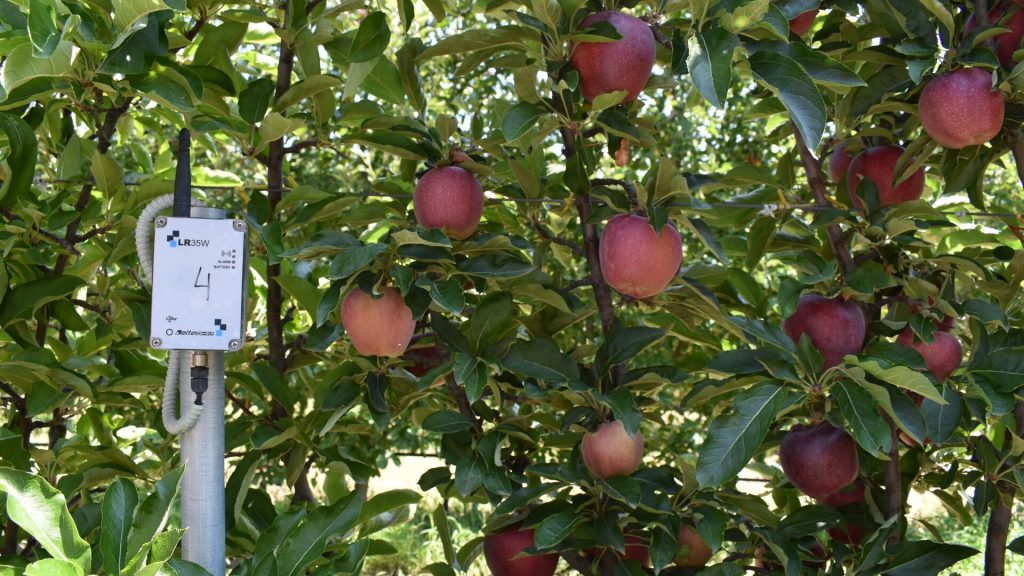
Vassilis: The challenges are multifaceted. Within the framework of the Irrigation Connectivity Hub, which is being developed in the area and is open to any farmer wishing to connect their soil moisture sensors and water meters, we must provide solutions that are affordable but at the same time sufficiently accurate and reliable. This is a major challenge. Additionally, as scientists, we often provide more information than the farmer actually needs. Therefore, the “bet” is managing to provide exactly the information required, without any unnecessary data.
Q: Some activities or results we should expect soon?
Andreas: Full deployment of the system following installation and testing of the instrumentation and coupling of the sensors to the on-line platform.
Vassilis: Currently, many (mostly technical) activities and field tasks are underway simultaneously. Having completed the selection of pilot fields and the choice of instruments (soil moisture sensors, water meters, and meteorological stations), we are now in the phase of installing them in the fields, alongside the telecommunications equipment that will transmit the data to our databases. In the coming period, our team, in collaboration with the Technical University of Crete, will finalize a smartphone-friendly web platform. By this summer, right in the heart of the irrigation season, farmers will have the Irrigation Connectivity Hub in their hands to improve their irrigation practices.
Q: What have you learned so far?
Andreas: Inertia is a huge power. Farmers need evidence and encouragement to follow and adopt new technologies they never tried before, even if they believe in it. At the same time, farmers are getting anxious to get hands on experience of the proposed system and have already started advertising they are proud to have been selected as champions for this endeavor.
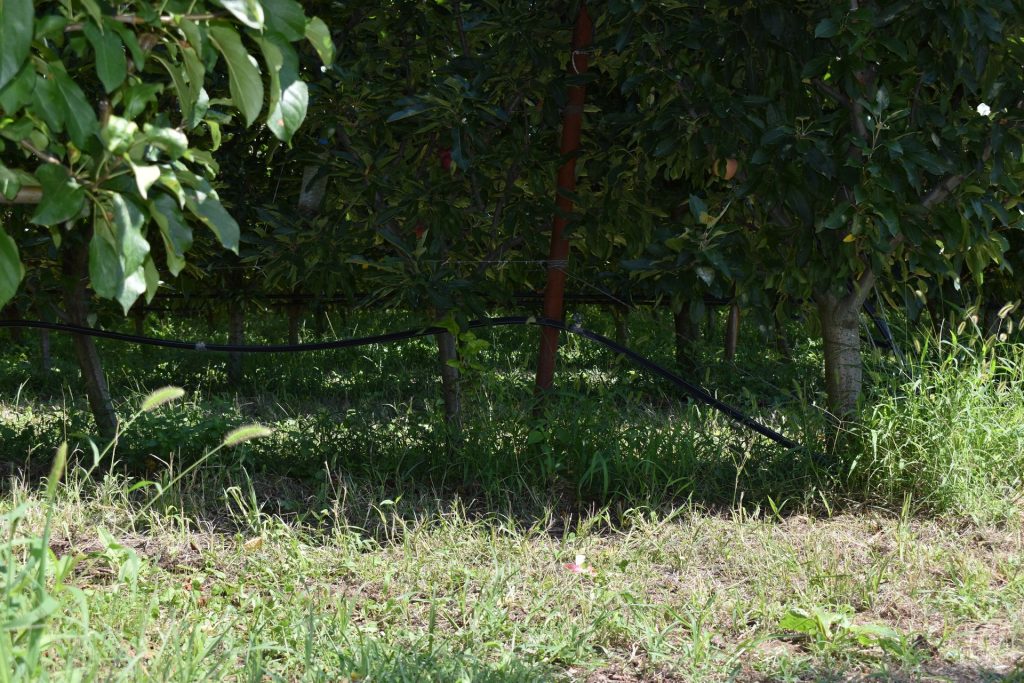
Vassilis: While until recently the dominant irrigation method, especially for apple cultivation, was the micro-sprinkler, we have noticed that drip irrigation is steadily increasing, particularly in new orchards. This indicates that local farmers have realized the necessity of applying more efficient irrigation methods.
We were also pleasantly surprised by the trend in recent years toward more agroecological practices. For example, in previous years, farmers used to apply herbicides between the tree rows and practically across the entire field. However, this practice has been overturned; farmers now apply herbicides exclusively on the tree line, in a strip about half a meter wide. In the rest of the field, they use mowing and mulching, and they are already seeking solutions to completely eliminate the use of herbicides.
Q: How does this work connect to your experience as a researcher or institution?
Andreas: The system is built upon R&D results deduced from previous projects and the joint efforts and experiences exchanged with the TUC. It goes a step forward providing the foundation for an easy to use, field-based data collection and analysis approach managed through an easy to operate user interface, putting the farmer at the center of the process by offering transparent and objective data, and allowing full freedom for decisions to be made on the basis of his/her experience
Vassilis: NexusLabs is not just another research project for us. It is another building block in the Pinios Hydrologic Observatory, which we have been building since 2015. It is now a Long-Term Ecosystem Research (LTER) site, but it simultaneously aims to provide services to the local community with the dynamic to scale up across the Pinios basin. With the NexusLabs project, we are capitalizing on the infrastructure and know-how from the ATLAS project, while from the LENSES project, we are leveraging the broad stakeholder network and the relationships of trust we developed with them.
For me personally, and for our entire team, every time we experiment in a field and with every farmer we collaborate with, we learn something new. Each field and each farmer represents a unique combination that gives us not only knowledge but also a new way of approaching these people and recognizing their actual, real-world problems.