At the UTAEM Living Lab, a multidisciplinary team of nine experts is bringing together knowledge from agricultural economics, soil science, climate change, irrigation management, and agricultural mechanization to tackle the interconnected challenges of the WEFE Nexus. Through the NexusLabs project, the team is testing and demonstrating nature-based solutions that support soil and water conservation, precision irrigation, carbon monitoring, and sustainable farming practices. By combining scientific expertise with close collaboration with farmers and local stakeholders, UTAEM is developing practical approaches that aim to improve resilience, reduce costs, and support more sustainable agricultural production in the Menemen Living Lab.
Q: What are you hearing from farmers, managers and other local stakeholders?
A: Water scarcity, input cost including energy cost, decrease in income, low organic matter content of the soil are main challenges of the farmers. Farmers are familiar to the solutions. However, traditional approach in cultivation period is common. Yield is in the first priority rather than ecosystem and the components of WEFE.
Farmers are interested in NBS implementations to be adapted in Menemen LL. Microbial fertilization implementation is one of the surprising and new solutions in the region.
When producers were informed about the activities implemented within the Living Labs, they showed particular interest in practices that could improve soil quality, enhance productivity, and reduce input costs, such as crop rotation, microbial fertilizers, and green manuring.
During the interviews with stakeholders, feedback was received that supported the views expressed by the producers. It was also noted that wider use of mulching practices would be important, as they can help improve soil quality and retain moisture in the soil. In addition, water harvesting was mentioned as a practice that could offer a useful new approach for olive-growing areas in the plain.
Q: Some activities or results we should expect soon?
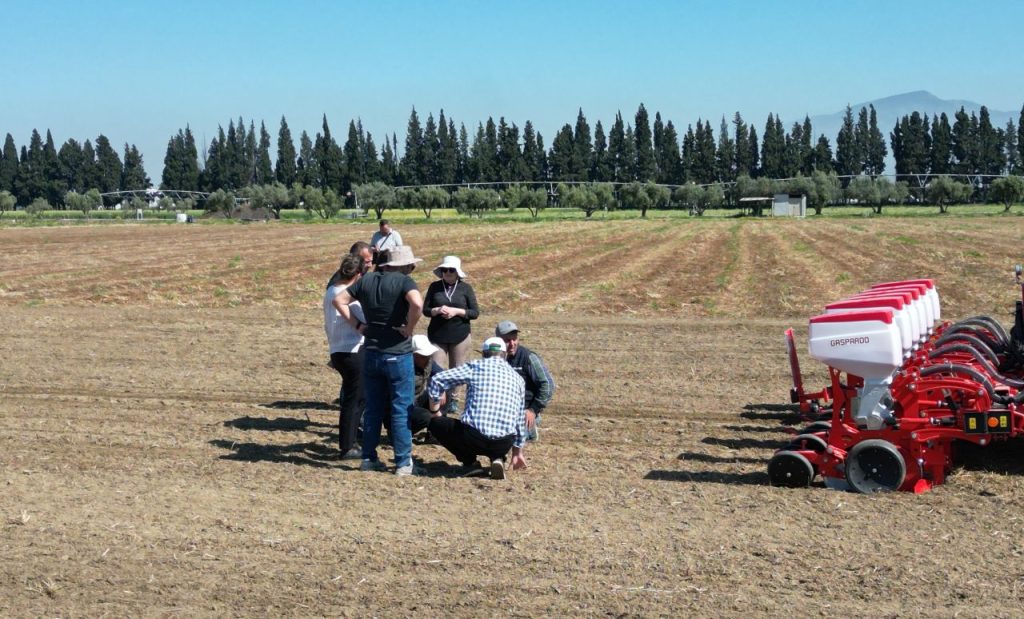
A: Demonstration activity in the field will be planned in irrigation season, 2026, introducing all the implemented NBS activities. OMWW implementation will be a very surprising implementation as an alternative water source.
Vetch is already harvested. CO2 sequestration graphic for vetch (at crop rotation area) will be produced, as well as yield and other outputs will be provided.
Q: How does this work connect to your experience as a researcher or institution?
A: NexusLabs project perfectly builds upon our multidisciplinary institutional experience at UTAEM. Infrastructure and demonstrative NBS applications have been developed to be presented in activities carried out as part of UTAEM’s training mission using the LL created through the Nexuslabs project.
The Nexuslabs project’s holistic approach, combined with UTAEM’s multidisciplinary perspective, has created a project working environment where all areas of expertise are integrated.
UTAEM’s expertise in soil and water resources has been integrated with the Nexuslabs project’s structure, which emphasizes ecosystems.