A regional meeting in Morocco brought farmers, researchers and Living Lab managers together to discuss practical solutions for more efficient irrigation, share field-level experience and explore opportunities for wider uptake. An encouraging early result from the Lounasda Living Lab showed an approximately 10% reduction in irrigation water applications following the installation of a weather station.
How can farmers make better use of available water while reducing unnecessary irrigation and energy costs? This question was at the centre of the second NexusLabs regional meeting, held on 28 September 2026 at the Faculty of Sciences and Techniques of the Cadi Ayyad University in Marrakech, Morocco.
Bringing smart irrigation closer to farmers
Professor Lahoucine Hanich presented the work underway in the Living Labs to develop practical tools for smart and precision irrigation. NexusLabs has deployed four low-cost soil-moisture monitoring stations and two weather stations across three pilot farms in the Tensift Living Lab.
The equipment is installed on the following farms:
- Yazid farm (~50 ha): two soil-moisture stations and one weather station.
- Lahna farm (~42 ha): two soil-moisture stations.
- Lounasda farm (~141 ha): one weather station.
By comparing crop water requirements with actual soil conditions, the system aims to help farmers apply the water their crops need, while reducing unnecessary irrigation, pumping and energy costs, and the risk of soil salinisation.
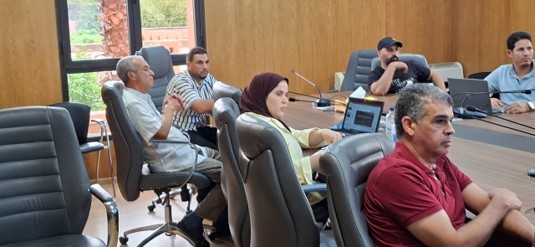
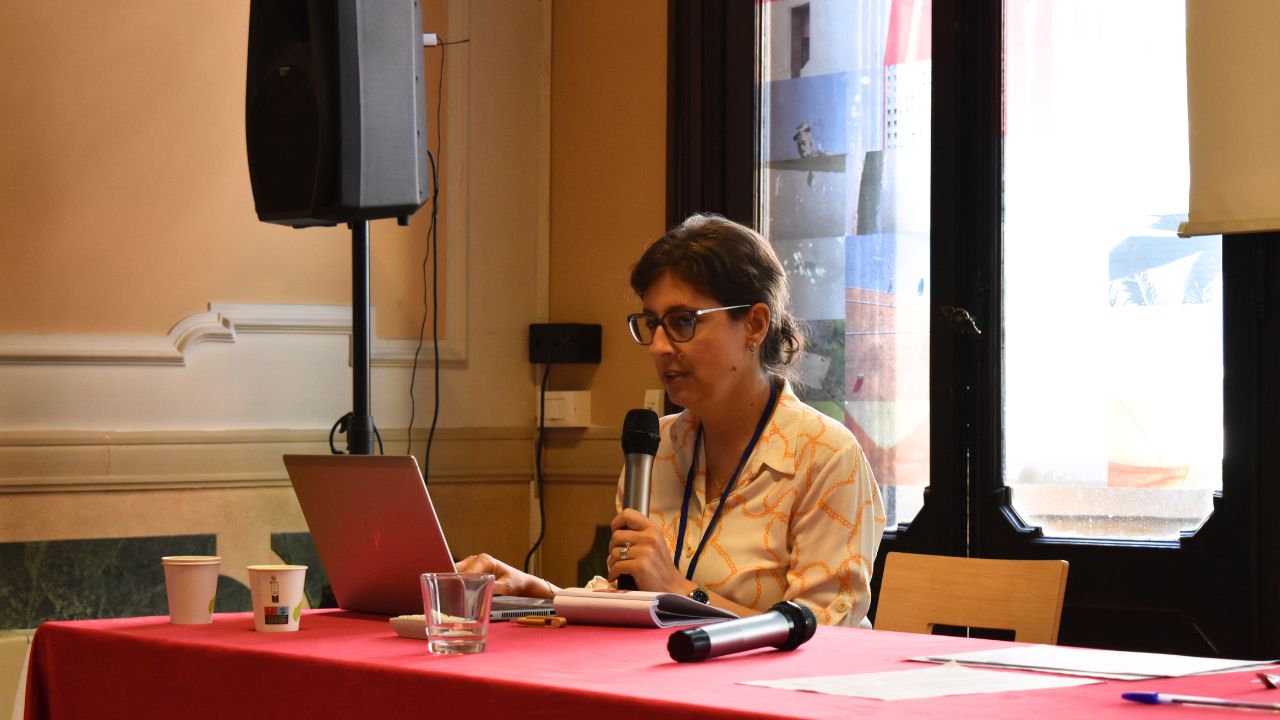
Participants discuss monitoring technologies and their practical application in irrigation management.
Early results from the field offer encouraging signs. The manager of the Lounasda Living Lab reported an approximately 10% reduction in irrigation water applications following the installation of a weather station. This initial result will be further documented and assessed as the project progresses.
Learning with farmers, not just for farmers
The meeting also provided an opportunity for farmers to raise questions about the operation of monitoring stations, the interpretation of data and their practical use in irrigation management. Their feedback and practical knowledge remain essential to understanding how these solutions can respond to real farming needs.
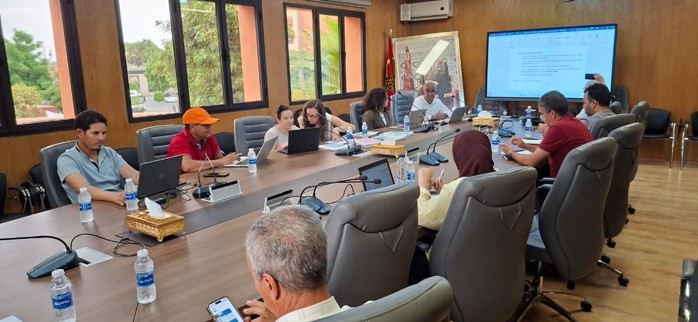
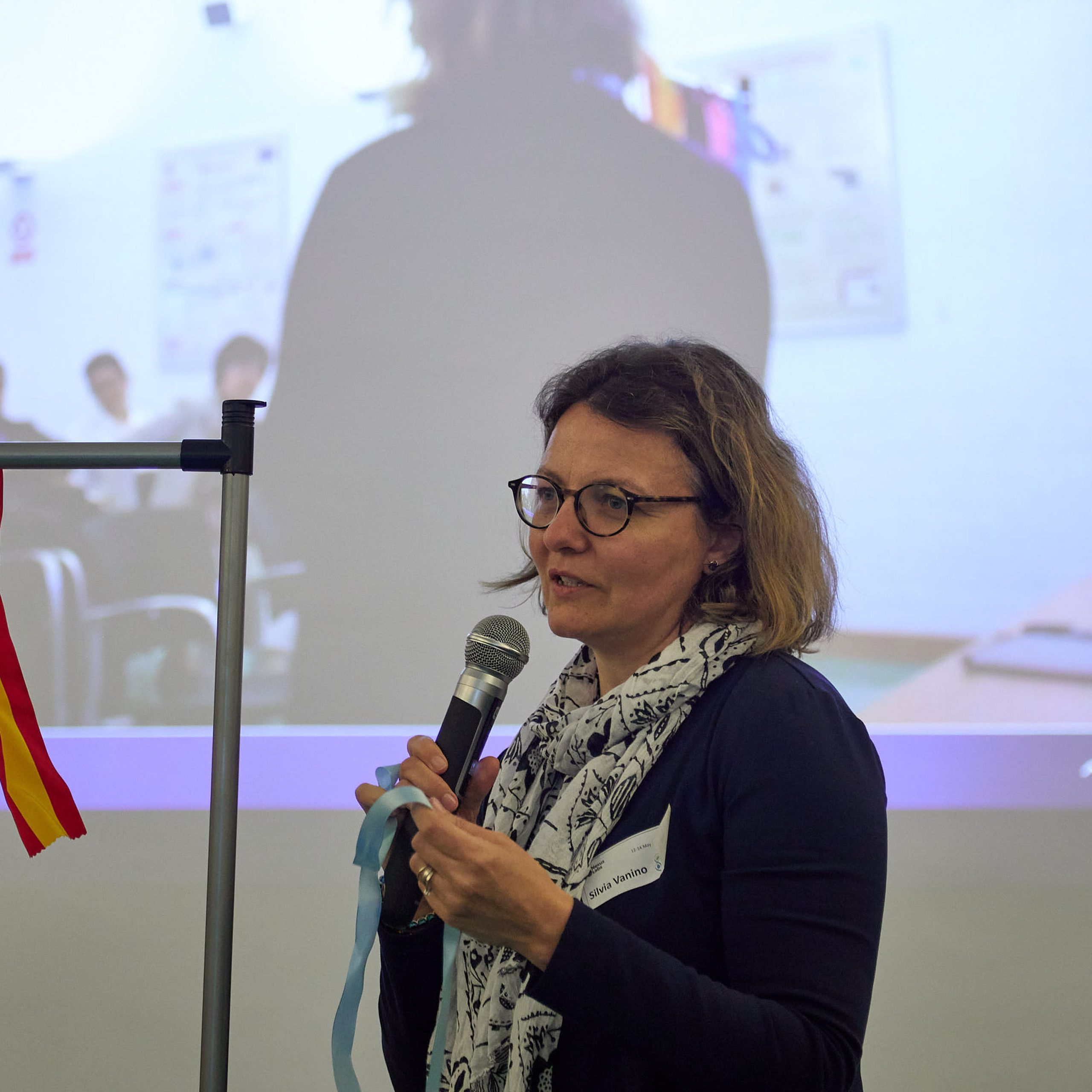
Professor Lahoucine Hanich presents the smart irrigation approach being developed across the Living Labs.
Alongside smart irrigation, participants discussed the project’s Social Life Cycle Assessment (S-LCA), Participatory System Dynamics Modelling (PSDM) and planned upscaling activities. These activities will gather the perspectives, experiences and expectations of farmers, Living Lab managers, local stakeholders and relevant authorities through questionnaires, focus groups and interviews.
The meeting also addressed the implementation of HydroWeb within the Living Labs, supporting its integration with monitoring and irrigation-management activities.
Looking ahead: from field experience to wider uptake
The discussions highlighted the importance of continuing to deploy and operate monitoring stations, strengthening the use of real-time data for irrigation scheduling, and ensuring that farmers’ feedback informs the development of project solutions.
By combining monitoring technologies with stakeholder participation and field-level learning, NexusLabs is working to make smart irrigation more practical and relevant to the people who will use it. The experience gathered in Marrakech will contribute to understanding what works, what needs further development and what conditions could support the wider uptake of these approaches.